| When using the cushion control the controlling surface is withdrawn on impact, rather like a boxer riding
a punch. Withdrawing the surface has the affect of "cushioning" or absorbing the speed of the ball. |
| |
 |
| |
| Practice |
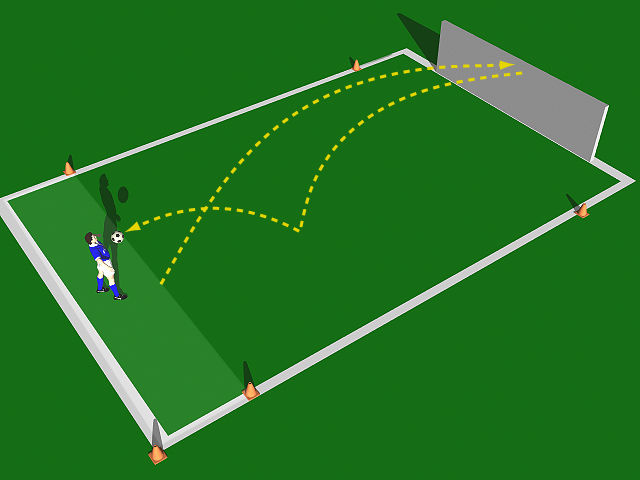
| From the area marked off by the cones, firmly strike the ball towards the wall. You must then control the ball
as efficiently as possible on the rebound and in the area marked by the cones. Control all rebounds using the "Cushion Control" technique. When controlling the ball do not allow it to run out of the marked area. Vary the
type of service you play against the wall so that the rebounds vary in height and speed. |
| |
| What You Need to Know |
-
 Position the body behind the flight of the ball as early as possible. This will lead to good composure and balance for receiving the ball instead of reaching out and being caught off balance. Position the body behind the flight of the ball as early as possible. This will lead to good composure and balance for receiving the ball instead of reaching out and being caught off balance.
-
Decide by the flight of the ball which controlling surface to select (head, chest, thighs or feet).
-
Remember to keep the head steady and eyes fixed firmly on the ball. The head weighs approximately
10 pounds, so any unnecessary tilting of the head will affect the whole balance of the body.
-
Offer the controlling surface of the head, chest, thighs or feet.
-
Immediately withdraw the surface on impact of the ball. This will have a cushioning effect and kill the power
of the ball. If the surface is not withdrawn quickly enough, the ball will bounce away from the player.
- In a well-executed cushion control the ball should lie close to the controlling surface.
|
|

